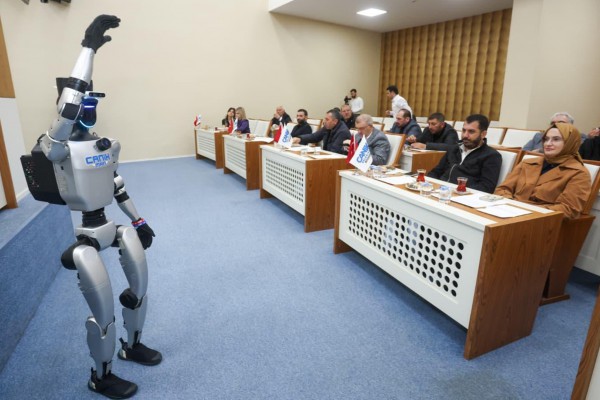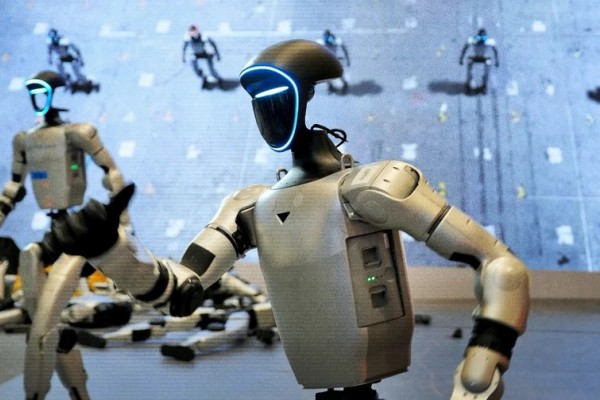



The AI race is no longer confined to code. It is moving into the physical world — where machines walk, think and work. At its core are humanoid robots, fast emerging as the next front line of industrial power.
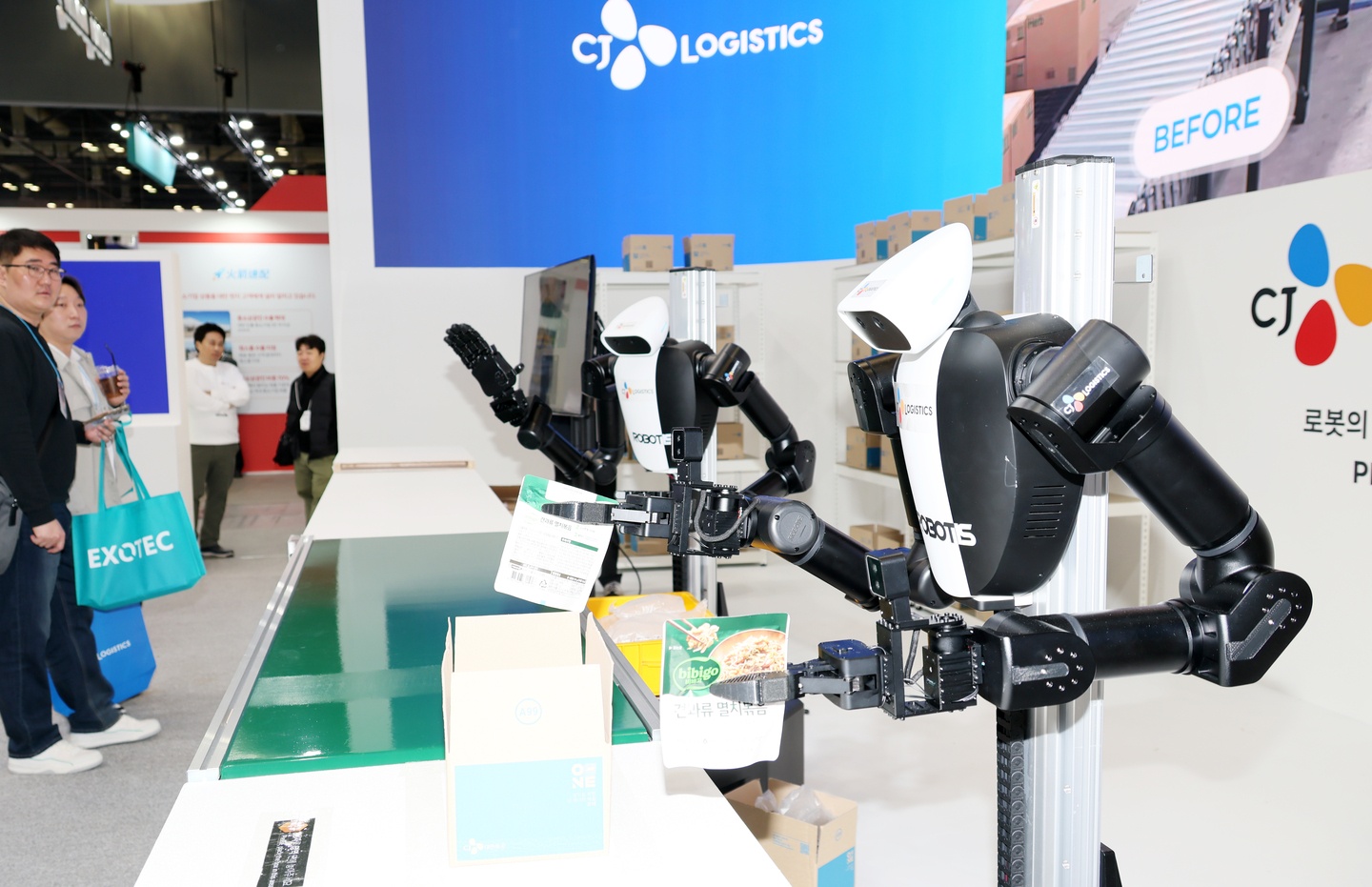
From Korean tech giant Samsung to global IT firm Meta, companies are now openly extending their businesses into humanoid robotics, all of which are moves to occupy the “body of AI.”
Samsung Electronics is expected to unveil a humanoid robot as early as the second half of this year, according to industry sources on May 6.
“Samsung Electronics is likely to accelerate the commercialization of humanoids starting in the second half,” said Kim Dong-won, an analyst at KB Securities. “The company will begin by introducing manufacturing-focused humanoids and dual-arm robots, which are applicable in semiconductor and display production lines.”
Samsung Electronics laid out its road map for humanoid robotics business during a conference call on April 30. Development of industrial humanoids would come first, followed by humanoid robots in the home and retail sectors once the technology matures.
“Through the development of humanoid robots, the combination of advanced robotics technologies, we aim to innovate manufacturing productivity and daily experiences,” said Park Soon-cheol, chief financial officer of Samsung Electronics. “We are internalizing key robotics components and building capabilities to develop customized parts optimized for our own robots.”
Strategic investments and acquisitions are options that Samsung might consider, according to Park.
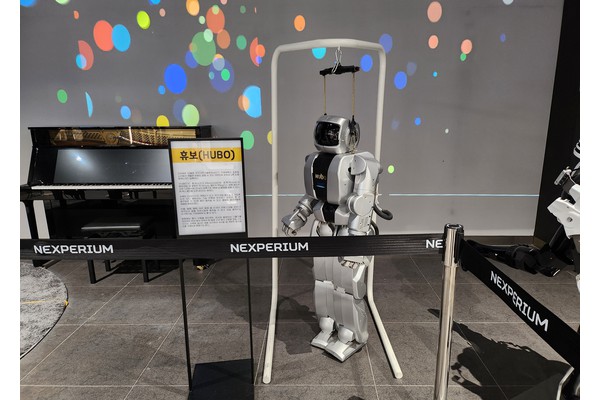
Over the past year, Samsung has been building its technological base to catch up with industry leaders through a unit dedicated to developing future-oriented robotics led by Oh Jun-ho, the developer of Hubo, Korea’s first biped walking robot.
Meta is making similar moves to secure its competence in humanoid robotics.
The company recently acquired the U.S.-based robotics AI startup Assured Robot Intelligence, which is developing a foundational model enabling humanoid robots to perform a wide range of physical tasks, including household labor. Meta noted that the firm is "at the frontier of robotic intelligence.”
Employees, including co-founder Xiaolong Wang, will join Meta Superintelligence Labs, the company’s AI division.
“The company plans to shift spending from the metaverse to AI wearables,” the Wall Street Journal reported in December 2025.
Industry observers increasingly view this year as a turning point for the commercialization of humanoid robots. If last year was a period of research and development that demonstrated technical feasibility, this year is expected to mark the moment robots move out of the lab and begin generating revenue in real-world industrial settings.
Global shipments of humanoid robots will reach around 1 million units annually between 2030 and 2035, according to Bank of America's projections.
A key driver of that growth is the steep decline in production costs.
Manufacturing costs, currently about $35,000 per unit, are expected to fall to roughly $13,000 within the next five years. A global labor shortage is also expected to accelerate humanoid adoption.
“The lack of available human work force is the fundamental reason why robots are needed,” said Choi Geon, an analyst at Korea Investment and Securities. “Humanoids will become a new pillar of economic growth that offsets shrinking labor forces.”
“The key is how quickly robots can generate revenue in real-world environments, not a simple demonstration of technologies,” said Kim Hee-tae, a researcher at the Korea Institute of Machinery and Materials.
“With the period leading up to 2030 serving as a golden window to decide market hegemonic power, Korea must localize core components by leveraging its world-leading manufacturing infrastructure while simultaneously securing AI capabilities,” Kim Hee-tae continued. “The strategic response to overcome labor shortages through a ‘robot economy' is the pressing agenda.”